
Solar panels in Pontypool can help homeowners and businesses reduce electricity costs, generate cleaner energy and become less dependent on the National Grid.
However, the performance and financial return of a solar PV system depend on more than the number of panels installed. Roof condition, orientation, shading, electricity consumption, inverter capacity and battery storage must all be considered.
This guide explains the principal costs, benefits and installation requirements for anyone considering solar panels in Pontypool.
Do solar panels work effectively in Pontypool?
Solar panels generate electricity from daylight rather than heat. They continue producing power during cloudy weather, although output is naturally higher on bright days and during the summer.
Annual generation depends on:
- Roof direction and pitch
- Available roof area
- Shading from trees, hills, chimneys and buildings
- Panel efficiency
- Inverter capacity
- System design
- Local weather conditions
- Equipment condition
An unshaded, south-facing roof normally offers the strongest annual generation. However, east- and west-facing roofs can also support worthwhile installations.
East-facing panels produce more electricity during the morning, while west-facing panels generate more later in the day. This arrangement can suit homes where electricity consumption is highest before and after work.
Shading should be assessed carefully. Even partial shading can affect generation, particularly where it regularly falls across the same section of an array. A professional survey should account for nearby buildings, mature trees, chimneys and the surrounding landscape before predicting performance.
Can Pontypool property owners receive export payments?
Eligible solar panel owners can apply for payments through the Smart Export Guarantee.
The Smart Export Guarantee enables qualifying small-scale generators to receive payments from participating electricity suppliers for electricity exported to the National Grid.
Rates and conditions vary between suppliers. When comparing export tariffs, consider:
- Payment per kilowatt-hour
- Contract length
- Import tariff charges
- Smart-meter requirements
- Eligibility rules
- Whether battery exports are accepted
- Exit fees
- Requirements to purchase electricity from the same supplier
An MCS certificate and evidence that the appropriate network connection process has been completed may be required.
Is battery storage worthwhile?
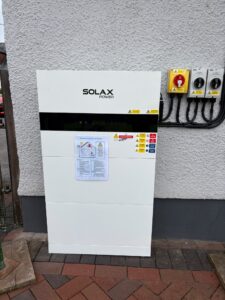
Solar battery storage allows surplus electricity generated during the day to be saved for use later.
This can be helpful for households where demand is highest during the evening, after solar generation has fallen. Businesses may also use batteries to support evening operations, manage peak demand or take advantage of compatible time-of-use tariffs.
Battery storage may help property owners:
- Use more of their solar electricity
- Reduce evening grid consumption
- Store surplus daytime generation
- Charge during cheaper tariff periods
- Monitor energy consumption
- Manage peak-time electricity demand
- Reduce exposure to future price increases
Energy Saving Trust guidance indicates that battery installations commonly cost several thousand pounds, with the final price depending on usable capacity, equipment specification and installation requirements.
A battery should be matched to the property’s generation and consumption. An oversized battery may not charge fully, while an undersized unit may not hold enough electricity to meet evening demand.
The installer should assess:
- Typical daily electricity consumption
- Expected solar generation
- Daytime self-consumption
- Available surplus electricity
- Evening demand
- Battery usable capacity
- Maximum charge and discharge rates
- Inverter compatibility
- Electricity tariff options
Battery storage can increase self-consumption, but it also adds to the initial installation cost. Its effect on payback should therefore be calculated separately rather than assumed.
Will a battery work during a power cut?
Not automatically.
Most grid-connected solar systems shut down during a power cut to protect engineers working on the electricity network. A battery can only provide backup electricity where compatible equipment and a purpose-designed backup arrangement have been installed.
Customers requiring backup power should ask:
- Which circuits will remain operational
- How much power can be supplied
- Whether solar panels can recharge the battery during an outage
- How long the available capacity may last
- Whether the changeover is automatic
Whole-property backup may require more equipment than a system designed to support a limited number of essential circuits.
Solar panels for Pontypool businesses
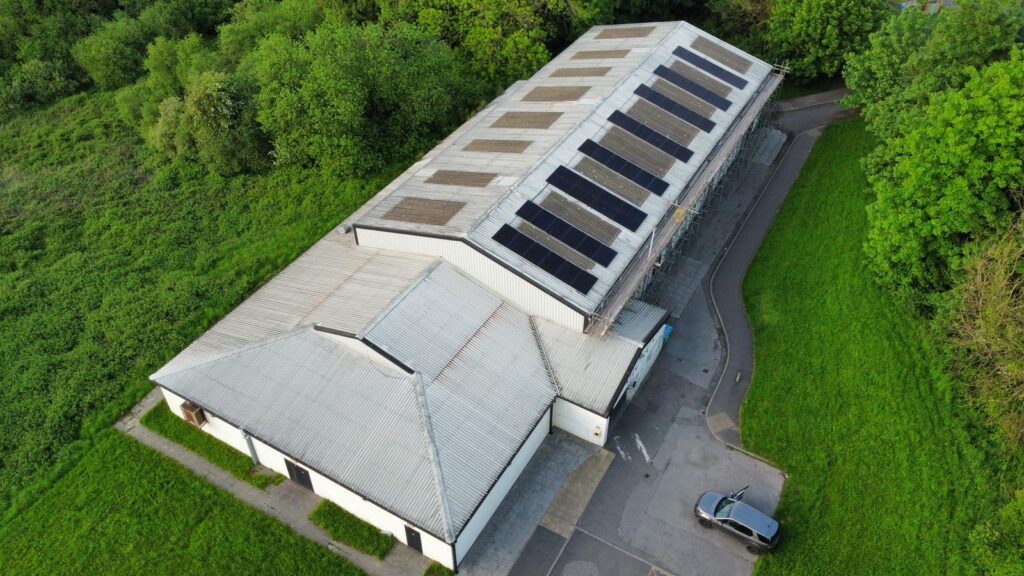
Commercial solar panels can be particularly effective for businesses that consume substantial amounts of electricity during daylight hours.
Suitable properties may include:
- Offices
- Workshops
- Warehouses
- Retail premises
- Manufacturing facilities
- Community buildings
- Leisure centres
- Schools and clubs
Before recommending a commercial system, the installer should assess:
- Annual and half-hourly electricity consumption
- Operating hours
- Roof condition and structural capacity
- Available roof space
- Three-phase electrical capacity
- Export restrictions
- Future business expansion
- Electric vehicle charging plans
- Battery-storage requirements
A commercial proposal should include estimated annual generation, anticipated self-consumption, financial assumptions and an indicative payback period.
Businesses should also establish who owns the building, whether landlord consent is required and how long they expect to occupy the premises.
Is planning permission required?
Many conventional rooftop solar installations may qualify as permitted development, meaning a full planning application is not normally required.
However, additional consent may be necessary where:
- The building is listed
- The property is in a conservation area
- Panels would be installed on a prominent elevation
- The installation projects excessively from the roof
- The system is ground-mounted
- The property is a flat or maisonette
- Permitted development rights have been removed
- Protected architectural features could be affected
Commercial installations may also require planning permission depending on their size, location and visual impact.
Property owners should consult the current Torfaen County Borough Council planning information if there is any uncertainty. Listed buildings and properties in sensitive heritage locations may require particularly careful assessment.
Planning status does not remove the need to comply with applicable structural, electrical and Building Regulations requirements.
Get in touch
If you are considering solar panels or battery storage in Swansea, the Big Green Solar team can assess your property, electricity usage and future energy requirements before preparing a tailored quotation. Visit Big Green Solar or call 0333 210 0083.
For insulation, rendering, roofing and other property-improvement services, visit LMG Home Improvements or call 0333 210 0083 to discuss your requirements.